
The Shofar-cry in Time of Trouble
"And if we are servants, we look only to You"
Below is a small slice from a 7-page article I wrote last year in Hebrew about the prayers and shofar-sounds of Rosh Hashanah, linked here. If you can, I encourage you to print it out for reading in its entirety. May God grant us all a year of life, prosperity, and peace.
In both his commentary to the Torah and in his remarkable ‘Sermon for Rosh Hashanah,’ Ramban goes to great lengths to understand the meaning of this awesome day. He shows how the Torah hints to the fact that this is the day when God considers the fate of every person, every country, and the entire world. This “considering,” what we can also all judgement, is a translation of the biblical zikaron; when we refer to the day as yom ha-zikkaron, this means that it is the day upon which God ‘considers’ His creations and decides “upon the countries of the world - those destined for war and those destined for peace, those for famine and those for plenty, those for death and those for life; on this day the lives of mortals are scrutinized to determine who is to live and who is to die” (Musaf for Rosh Hashanah and Pesikta d’Rav Kahanah 23).
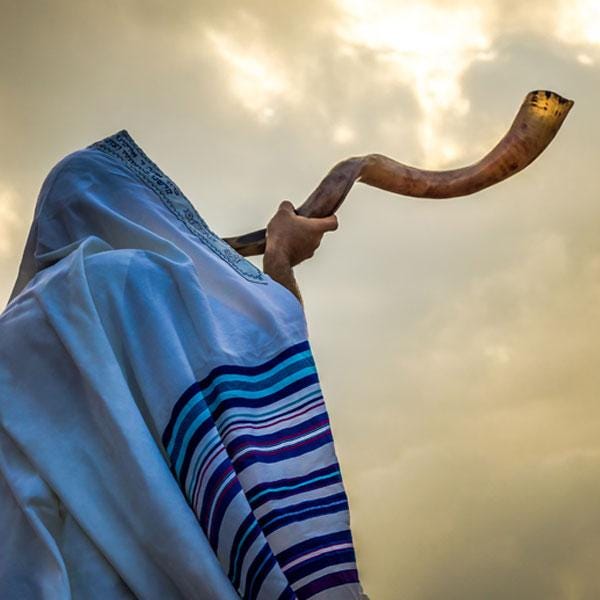
Rosh Hashanah is not merely a day of zikaron, however, it is a day of zikhron teru’ah, a day of remembrance through shofar-blowing. Ramban cites a Midrash stating that Israel knows how to “entice” God with the teruah blast, causing Him to shift from the Throne of Judgment to the Throne of Mercy, indicating that the judgement of this day is transformed by the shofar blowing. The actual mechanics involved, the question of how playing a musical instrument can affect such a change is one that Ramban leaves to kabbalistic secrets.
In his legal writings, though, Ramban connects the shofar directly to prayer (in his commentary to Rif, Rosh Hashanah 11a). The shofar is not (only) a sound of triumph, but a raw cry, the sobbing plea of a person in distress. He references the Talmud, saying that the shofar blasts were instituted specifically in the midst of the Musaf prayer "so that our prayer may be elevated through the shofar." He notes that this is the same reason we sound the shofar on public fast days or in times of war—it is the sound of a community in crisis. The shofar blasts on Rosh Hashanah are an expression of our desperation on the Day of Judgment, of our crying out to be saved, no less than in any time when we are threatened: “and if war shall come to your land, on the oppressor who oppresses you, you shall blow on the trumpets” (Bamidbar 10:9).
This type of prayer, the cry of the distressed person in a time of trouble, has a special halakhic character. Ramban holds that while daily prayer is a rabbinic institution, the biblical commandment to pray is specifically when we are in crisis. It is then that we are obligated by the Torah to cry out to God. Elsewhere in his commentary, Ramban highlights the special power of the prayer of the poor and oppressed that God is particularly attuned to because the oppressed have no one else to turn to. This is true of the widow, the orphan, and the poor, “for when he cries out to Me, I will listen, for I am compassionate” (Shemot 22:22-26; see Ramban there) and it was true for the people of Israel in Egypt, who were redeemed despite being undeserving, because they called out to God in their distress (Ramban, Shemot 2:25).
Crying out to God in a time of trouble is not just a plea for help; it is a fundamental act of serving God. It represents the declaration of a servant's total dependence on their master. When we cry out to Him and Him alone, we are embodying our role as avadav, His servants. We are saying that we have nowhere else to turn, no one to rely upon. It is for this reason, I believe, that our prayers throughout these days express feelings of destitution - כדלים וכרשים, דלים ורקים, we are impoverished and empty, not only of merits, but of any solutions to our problems save from turning to God, our master.
On the Day of Judgment, we cry out with prayer and the blast of the shofar. "It is a time of trouble for Jacob, but he shall be saved from it." May it be His will that we are saved this year, and that our cries of distress be transformed into songs of joy and thanksgiving.
תכלה שנה וקללתיה, תחל שנה וברכותיה
Amen! This is great.